The pandemic

This John’s blog was inspired by reading some of April Gough’s poems from her up-and-coming book: ‘Between Now and Hope’ It will be released sometime during the month of April. It’s a collection of poems that focus on making this world a better place to live in.
I cannot write poems but I CAN write blogs that express this topic, with not so much poetic excellence as April can, but with downright Integrity and Veracity.
By being honest and truthful in my beliefs.
Link to April’s Substack Page.
https://substack.com/@aprilgough1

There is one thing good that came out of COVID and that was THE LOCKDOWN it taught us how to be a community and be, and live as one.
The last time we ever felt this way was during WW1 and WW2 when we all had to pull together as one nation to be able to just survive and live in harmony with each other.
It’s strange and ironic to think that although there was a war going on, and people were dying in their millions, (just like during the pandemic) we felt more safer as a community than when we are at peace with each other?
The ultimate of this would be if we ever got invaded by aliens from another galaxy, then-and-only-then would we work together as one BIG community.
A WORLD GLOBAL INTERNATIONAL COMMUNITY that’s all working together as one BIG army.
Blacks, Browns, Yellows, Half-casts, Red Skins and Whites. All on one side fighting the Greens!
Why the fuck can’t we do this when we are NOT always fighting?
The reason is: Societies tend to unite, or ‘stick together,’ during war due to a combination of psychological, evolutionary, and social factors triggered by external threats. War acts as a powerful, unifying force that simplifies complex social issues, creates shared goals, and heightens in-group solidarity against a common enemy.
The common enemy during the pandemic was COVID. Why do we always have to have a common enemy to stick together?
Why can’t we all stick together without a common enemy being present?
I have studied this for years, and I have come to the conclusion that humans often struggle to stick together without a common enemy because our species is hardwired for tribalism, competition for resources, and ‘othering’ (creating an “us versus them” mentality), which are easier to maintain than genuine, inclusive unity. A common enemy provides a convenient, temporary, and intense sense of solidarity, whereas uniting under a common goal requires overcoming complex ideological, cultural, and selfish interests.
I have found that humans evolved to bond within small groups (‘pack mentality’). Oxytocin, the hormone associated with bonding, has been found in studies to strengthen in-group solidarity and increase aggression toward out-groups. I feel that deep down, humans have an instinct for competition for resources, which stems from evolutionary survival strategies where stronger groups dominated weaker ones.
This is why the youth join gangs primarily to fulfil deep-seated needs for belonging, protection, respect, and identity, often driven by, poverty, family dysfunction, or lack of opportunity. They are often "pulled" by the allure of money and status, or "pushed" by fear, intimidation, and peer pressure. Gangs act as a surrogate family, offering a sense of community to vulnerable individuals.
When no obvious enemy exists, humans tend to find or invent one to maintain this groupish focus. Without a threat to unify them, differences in beliefs, religions, politics, and values create natural divisions. I have observed that a common enemy often produces only a surface-level unity, which does not address internal differences, but rather suppresses them.
It is less vulnerable and easier to connect through shared hatred or opposition than through shared positive goals. Rallying against an external enemy acts as a smoke screen, diverting attention away from inner-group problems or authoritarian. When resources seem limited, humans naturally divide into competitive factions rather than cooperating for the common good.
That’s why human nature includes tendencies toward selfishness and ego, which are often suppressed only under extreme duress, such as a major war or threat.
To achieve lasting unity, it is argued that humanity must shift from enemy-driven unity (based on fear) to purpose-driven unity (based on shared goals and empathy). However, as long as a common enemy is absent, internal divides tend to resurface. It all comes down to the fact that when we are all in the same sinking ship we feel as one, no one is better or richer or higher in society than any one else.
The 1997 film Titanic heavily emphasises this when the theme that wealth and social status become meaningless in the face of death, with the sinking of the ship acting as a ‘great equaliser’ that strips away the power of money and status. Hockley’s attempt to use money to secure a spot on a lifeboat is portrayed as futile, with the bribe eventually being rejected by a guilt-ridden officer, highlighting that money has no value on a sinking ship.
Going back to our unappreciated existence of living on a beautiful planet that is travelling at a speed of 447,000 to 550,000 miles per hour around the Milky Way. This movement represents the entire solar system’s journey around the galactic core, taking roughly 225–250 million years to complete one orbit.
We are living on a beautiful planet that offers a vast array of reasons for gratitude, spanning from the fundamental life-sustaining systems to the aesthetic joys that improve mental and physical well-being. According to insights from NASA and environmental studies, we can be thankful for the delicate balance that allows life to thrive, such as the atmosphere that protects us, breathable air, and the clean water that sustains us.
The ‘thin envelope of molecules’ makes life possible, protecting us from space debris while providing oxygen, which is produced and regulated by oceans and forests. The planet provides abundant, fresh water for drinking, swimming, and nurturing life, along with fertile soil to grow food. Earth is perfectly positioned to support life, offering stable land and gravity that allows us to walk and live comfortably.
The world is constantly painting pictures of ‘infinite beauty’ sunrise and sunset, changing seasons, and diverse landscapes ranging from mountains to oceans. Immersing oneself in nature, forest-bathing, walking by a stream, or gardening is scientifically proven to reduce stress, anxiety, and depression.
The sheer variety of life, including flowers, animals, and insects, offers wonder and prevents boredom, adding colour and diversity to daily life. Nature provides resources that support livelihoods and offers solutions to environmental challenges, such as forests that act as carbon sinks, storing carbon and cooling the planet.
Insects and animals, such as bees, butterflies, and bats, are critical for pollinating the crops that feed us. Nature is a source of inspiration for creativity and provides natural products that have led to advancements in medicine. The ability to experience the feel of a pleasant breeze, the smell of flowers, or the sound of water in our everyday lives. Our planet provides spaces for joy and exercise, including hiking, boating, surfing, and stargazing, allowing us to witness the cosmos. Being grateful for these gifts can foster a deeper sense of responsibility to protect the planet for future generations.
So why the fuck are we always trying to destroy it? We will never ever be satisfied with what we have got, we always want MORE. Greed and Envy are the two most powerful destructive emotions that we possess. Greed and Envy is linked to insecurity, low self-esteem, and resentment, while greed is driven by fear, emptiness, and an inability to be content. Envy can lead to malicious actions to destroy another’s advantage, whereas greed leads to hoarding or reckless pursuit of gain.
‘We need to be able to change the way we are thinking’. If we can Accept and change the way we are thinking, we can change our attitude, if we can change our attitude, we can change the world in which we live in.
We can become as one, and be united with each other and live in peace.
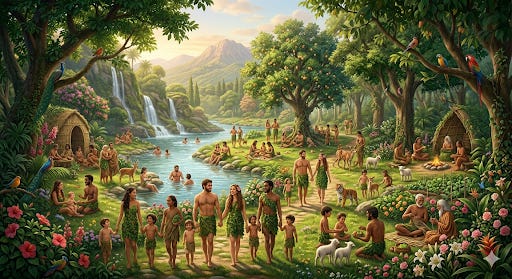
What a wonderful world this could be.
Click link below:“Acceptance” ‘Change the way you are thinking’ (Full 359 pages)
Click link below: